

There’s something incredibly satisfying about stepping into your backyard and seeing a raised garden bed bursting with colorful flowers and fresh vegetables. I didn’t always have a green thumb, but when I built my first raised garden bed a few years ago, it completely changed the way I approached gardening. Raised garden beds are not only practical but also beautiful, and they make gardening accessible for beginners and experienced gardeners alike. In this article, I’ll share everything I’ve learned about growing flowers and vegetables in a raised garden bed so you can start your own thriving garden.
Why Choose a Raised Garden Bed?
Before I switched to raised garden beds, I struggled with poor soil, weeds, and backaches from bending over all the time. Raised garden beds solved all of these problems in one neat, organized solution. They offer better soil quality, improved drainage, and easier access for planting, weeding, and harvesting. Plus, they enhance the aesthetic of your backyard, providing a clean, well-maintained look that is perfect for anyone aiming for a tidy outdoor space.
One of the best things about raised garden beds is that they give you complete control over the soil. If your yard has rocky, clay-heavy, or sandy soil, you no longer have to fight with it. Instead, you can fill your raised bed with nutrient-rich soil tailored to your plants’ needs, creating an ideal growing environment for flowers, vegetables, or herbs. This control means you can avoid the frustrations of trying to amend poor ground soil and instead focus on what matters most—growing healthy, thriving plants.
Raised garden beds also improve drainage, allowing excess water to flow away from the roots of your plants, preventing waterlogging, which can lead to root rot. This is especially beneficial if you live in an area with heavy rainfall or if your soil tends to retain too much moisture. The elevated structure keeps your plants’ roots drier and healthier, reducing the risk of fungal diseases.
Another significant advantage of raised garden beds is the ease of access. No more bending over or kneeling on the ground, which can be taxing on your back and knees. Whether you’re planting, weeding, or harvesting, raised beds allow you to work at a more comfortable height. This makes gardening much more enjoyable, especially for people with mobility issues or those who simply prefer a more ergonomic approach to gardening.
Lastly, raised garden beds provide better protection from pests and animals. The borders of the bed can act as a deterrent to small animals like rabbits and squirrels, while the elevated nature of the beds can help prevent certain types of pests that live in the ground from accessing your plants. This is particularly useful for organic gardeners looking to reduce the need for chemical interventions.
All in all, raised garden beds are a practical and visually appealing way to garden. They solve multiple common gardening problems, giving you the freedom to grow your plants in a healthy and manageable environment.
Setting Up Your Raised Garden Bed
Building my first raised garden bed felt like a big project, but it turned out to be easier than I thought. With just a little time and effort, I created a beautiful, functional space to grow plants. There are several ways to go about it—you can buy pre-made kits or build your own from materials like wood, bricks, or stone. I opted for wood because it was both affordable and easy to work with, plus it adds a rustic charm to the garden. Cedar is an excellent choice for the wood as it’s naturally resistant to rot, ensuring your bed lasts for years.
Steps to Set Up a Raised Garden Bed:
- Choose the Location:
The first step in setting up your raised garden bed is choosing the perfect location. Most flowers and vegetables require at least 6–8 hours of sunlight each day, so pick a sunny spot that gets plenty of light. It’s also helpful to select a location that is relatively flat and easily accessible from different angles, making planting and harvesting easier. Avoid spots that are prone to water pooling or areas with poor drainage, as they can negatively impact the health of your plants. - Measure and Build:
Once you’ve chosen your location, it’s time to decide on the size and shape of your raised bed. A standard and popular size is 4 feet by 8 feet, as it allows you to reach across without stepping into the bed. This makes it easier to maintain your garden without compacting the soil. You can adjust the size to fit your available space, but try to keep the width manageable—ideally no more than 4 feet across. After deciding the dimensions, use your material of choice (wood, bricks, etc.) to create the border for the bed. Make sure the corners are secure and the structure is level. - Prepare the Ground:
The next step is preparing the ground beneath your raised bed. Begin by clearing any existing grass, weeds, or debris from the area. If the ground is uneven, level it as much as possible. To prevent weeds from growing up into your garden, lay down a layer of landscape fabric or cardboard at the bottom of the bed. This will block weed growth while allowing water to drain freely through the soil. It’s an extra step that helps keep maintenance to a minimum as your garden grows. - Fill with Soil:
Now that your bed is in place, it’s time to fill it with soil. A nutrient-rich mix is essential for healthy plant growth. I recommend using a combination of topsoil, compost, and organic matter, which will create a loose, fertile base for your plants. You can also buy pre-mixed garden soil specifically formulated for raised beds, but making your own mix can be both cost-effective and customizable to the needs of your garden. Aim for a soil depth of at least 8–12 inches to give your plants enough space for their roots to grow deep. - Add Mulch or Cover:
After planting your flowers, vegetables, or herbs, cover the surface of the soil with mulch. Mulch helps retain moisture, keeps the soil temperature stable, and prevents weeds from sprouting. You can use organic mulches like straw, wood chips, or shredded leaves. In addition to helping with weed control, mulch will also break down over time, adding valuable organic material back into the soil. If you’re growing plants that are sensitive to the elements, you can also use row covers or netting to protect them from pests or harsh weather conditions.
I found that starting small and adding more beds over time was the best approach for me. It let me experiment without getting overwhelmed.
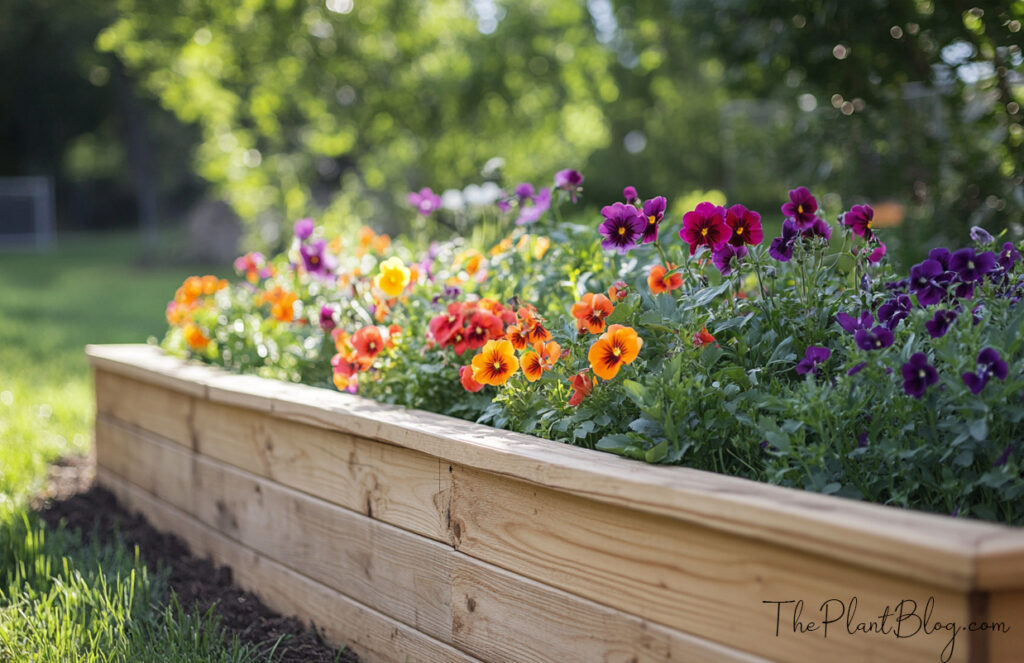
Growing Flowers in a Raised Garden Bed
Flowers bring color and beauty to any garden, and a raised garden bed is an ideal place to grow them. When I first started, I focused on easy-to-grow flowers like marigolds, zinnias, and petunias. These flowers added vibrant color and were great for attracting pollinators like bees and butterflies.
Here are some simple tips to help you grow flowers successfully in your raised garden bed:
Mix Annuals and Perennials:
Annual flowers bloom for a single season, giving you lots of color right away. Perennials, on the other hand, come back year after year. By mixing both types of flowers, you get a garden that’s full of vibrant blooms throughout the year, with annuals offering quick rewards and perennials providing long-term beauty.
Consider Companion Planting:
Some flowers, like marigolds and nasturtiums, are excellent companions to vegetables. These flowers can help repel pests, keeping harmful insects away from your veggies. This makes your garden healthier and more productive. Companion planting is a natural and effective way to protect your plants without using chemicals.
Deadhead Regularly:
Deadheading means removing spent blooms—those flowers that have faded and are no longer producing. By doing this, your plants will focus their energy on growing new blooms instead of using resources on old ones. This helps keep the garden looking tidy and encourages more flowers to grow.
Choose Plants for Pollinators:
Bees, butterflies, and other pollinators are essential for a healthy garden. Flowers like lavender, coneflowers, and sunflowers attract these helpful creatures, which can also improve the pollination of your vegetables. By growing flowers that attract pollinators, you’re supporting both your flowers and your veggies.
Growing Vegetables in a Raised Garden Bed
Growing vegetables was the main reason I decided to build my raised garden bed. There’s nothing like stepping outside to pick fresh lettuce, tomatoes, and carrots that you’ve grown yourself. Raised garden beds make vegetable gardening easier because you can control the soil quality, improve drainage, and space your plants out properly for better growth.
Here are some vegetables that do really well in raised beds:
Leafy Greens: Lettuce, spinach, and kale are all perfect for raised garden beds. They grow quickly and thrive in the loose, fertile soil that raised beds provide. Plus, leafy greens don’t need a lot of space, so you can grow several different varieties in a single bed, allowing you to enjoy fresh salads all season long.
Root Vegetables: Carrots, radishes, and beets love the loose, well-drained soil found in raised garden beds. The soil in raised beds is often lighter and airier, which allows root vegetables to grow straight and strong. This makes it easier to harvest them without worrying about rocks or compacted earth getting in the way.
Tomatoes and Peppers: Tomatoes and peppers need a lot of sunlight and rich, well-draining soil, both of which are easy to provide in a raised garden bed. Raised beds help ensure that your plants have the nutrients they need to grow healthy and strong. Since these vegetables can get quite tall, raised beds also provide better support for them, and you can easily add stakes or cages to keep them upright.
Herbs: Herbs like basil, cilantro, and parsley are ideal for raised beds. They’re easy to grow and add fresh flavor to your meals. Herbs don’t need a lot of space, so you can plant multiple types together in a smaller raised bed. Plus, they grow quickly, which means you’ll have fresh ingredients for cooking all season long.
Growing vegetables in a raised garden bed is a rewarding experience. With better soil, drainage, and spacing, your plants will thrive, and you’ll have a bountiful harvest right at your doorstep. Whether you’re a beginner or an experienced gardener, a raised bed is an excellent way to grow fresh, delicious vegetables.
Vegetable Gardening Tips:
- Plan Your Layout: Group plants with similar water and sunlight needs.
- Use Supports: Trellises and stakes are great for climbing plants like beans and cucumbers.
- Rotate Crops: Change the location of your vegetables each year to prevent soil depletion and reduce pests.
- Water Deeply: Raised beds can dry out faster than ground-level gardens, so water deeply and consistently, especially during hot weather.
Caring for Your Raised Garden Bed
One of the things I love most about raised garden beds is how low-maintenance they are. Regular watering, occasional weeding, and seasonal fertilizing are all it takes to keep them thriving.
Key Care Tips:
- Add Compost Regularly: Refresh the soil with compost each season to keep it nutrient-rich.
- Mulch to Retain Moisture: A layer of mulch helps conserve water and keeps weeds down.
- Monitor for Pests: Check for signs of pests and use natural methods like neem oil or companion planting to keep them at bay.
- Prune and Harvest Regularly: Keep your plants healthy by removing dead leaves and harvesting vegetables when they’re ripe.
Lessons Learned from My Raised Garden Bed
Gardening in a raised bed has taught me a lot about patience and persistence. Not every plant will thrive, and that’s okay. It’s all part of the learning process. I’ve had seasons where my tomatoes grew like crazy and others where they struggled. But every year, I gain more knowledge and confidence.
One of the biggest lessons I’ve learned is that gardening doesn’t have to be perfect to be enjoyable. My raised garden bed has become a place of relaxation, creativity, and connection with nature. Whether I’m picking flowers for a bouquet or pulling carrots for dinner, there’s a sense of pride and satisfaction that’s hard to beat.
Final Thoughts
If you’re thinking about starting a raised garden bed, I can’t recommend it enough. It’s an easy and rewarding way to grow flowers and vegetables, even if you’re a beginner. With the right setup, a little planning, and regular care, your raised garden bed can become a thriving source of beauty and fresh produce.
So grab some soil, pick your favorite plants, and start digging. Trust me—you’ll be hooked in no time!